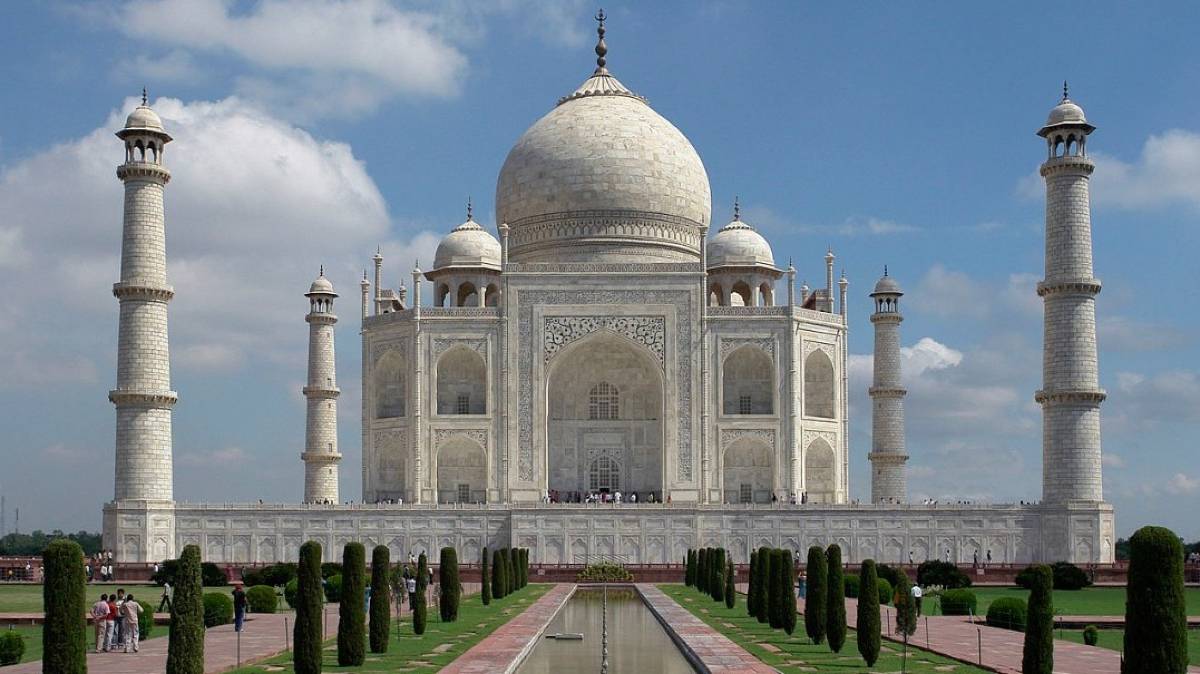
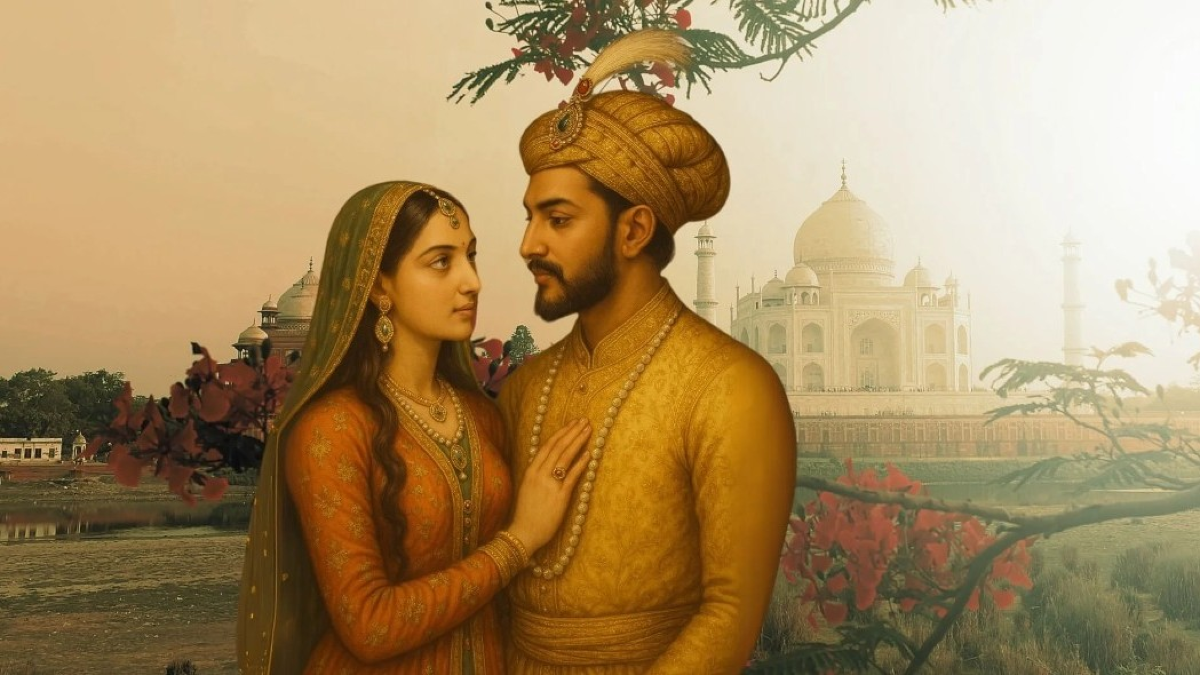
Above: Image of The Taj Mahal, Agra, India.
Commissioned in 1632 by the Mughal Emperor Shah Jahan to build a tomb of his beloved wife, Mumtaz Mahal, this UNESCO World Heritage site remains the finest example of Mughal Architecture in existence. It's the perfect blend of Indian, Persian and Islamic styles, creating a visual harmony that has captivated travellers and historians for centuries together.
The Master Of Symmetrical Design
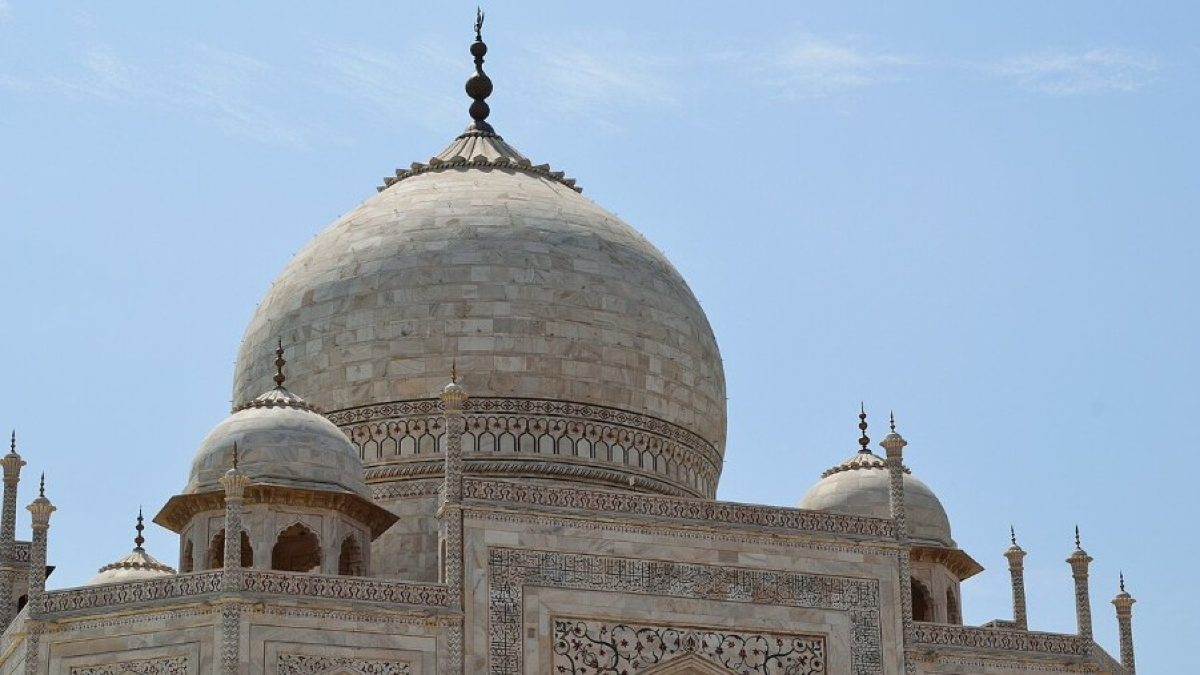
One of the most striking features of the Taj Mahal is its perfect “bilateral symmetry.” The entire complex is built along a central axis, with the main mausoleum flanked by two identical structures: a mosque to the west and a “jawab” or a guest house to the east. This balance is symbolic to the Mughal emperor’s obsession in being perfect and the concept of paradise on Earth.
The central dome, also known as the “onion dome” due to its unique shape, reached a height of nearly 73 meters. It is surrounded by four smaller domed kiosks or “chhatris” and four slender minarets at the corners of the plinth. Interestingly, these minarets were designed with a slight outward tilt. This was a deliberate choice of the architect to ensure that, in the event of natural calamity like an earthquake, the tower would fall away from the main tomb rather than into it.
The Art Of Pietra Dura
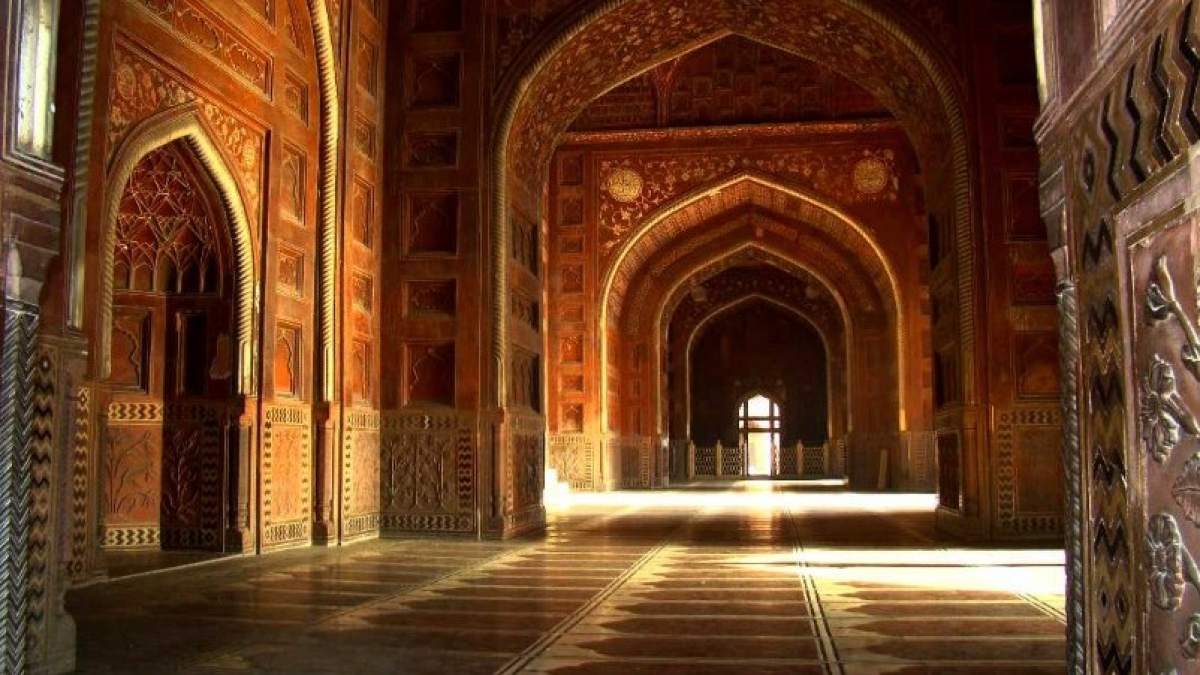
The true beauty hides in the details. The exterior is adorned with “Pietra Dura,” an architectural decorative art where semi-precious stones like lapis lazuli, crystal and turquoise are in-laid into the white marble. These stones are carved into intricate floral motifs that appear to glow when touched by the sunrays.
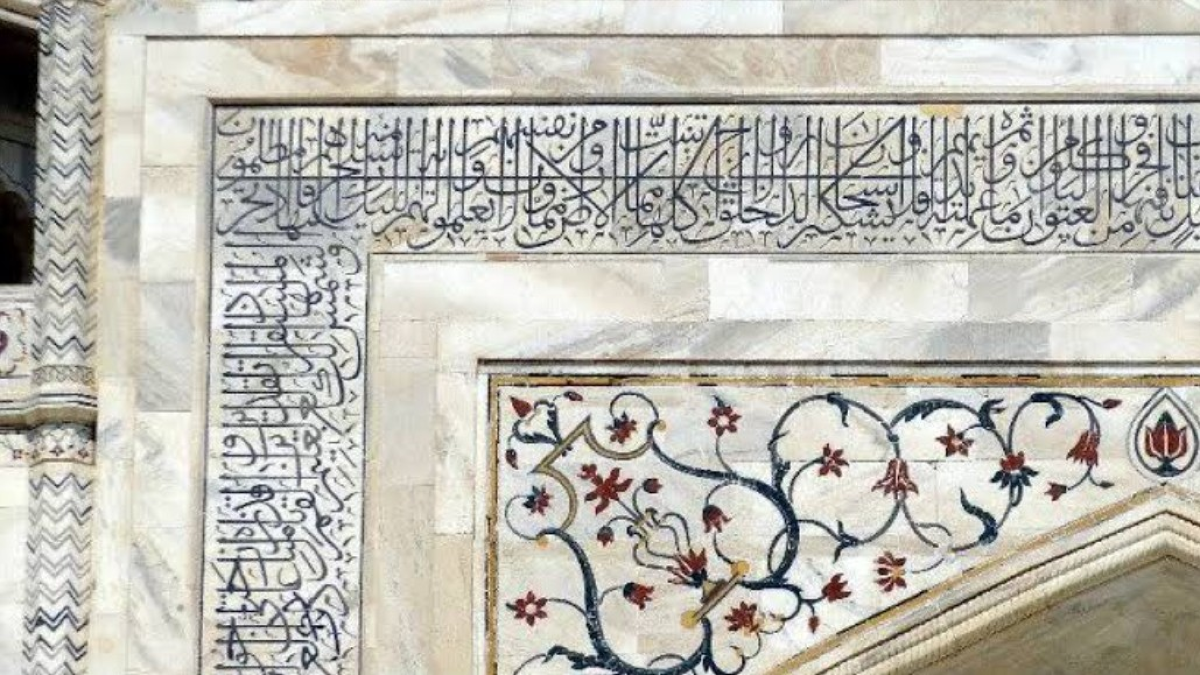
In addition to this, the monument features extensive calligraphy. Verses from the Quran are inscribed throughout the complex, particularly around the arched entrances, known as “pishtaqs.” The calligraphy was designed by the master Amanat Khan, who used a clever optical trick: the letters at the top of the arches should be a bit larger than those present at the bottom, making the text appear uniform in size to someone standing in the ground.
A Living Canvas Of Light And Color
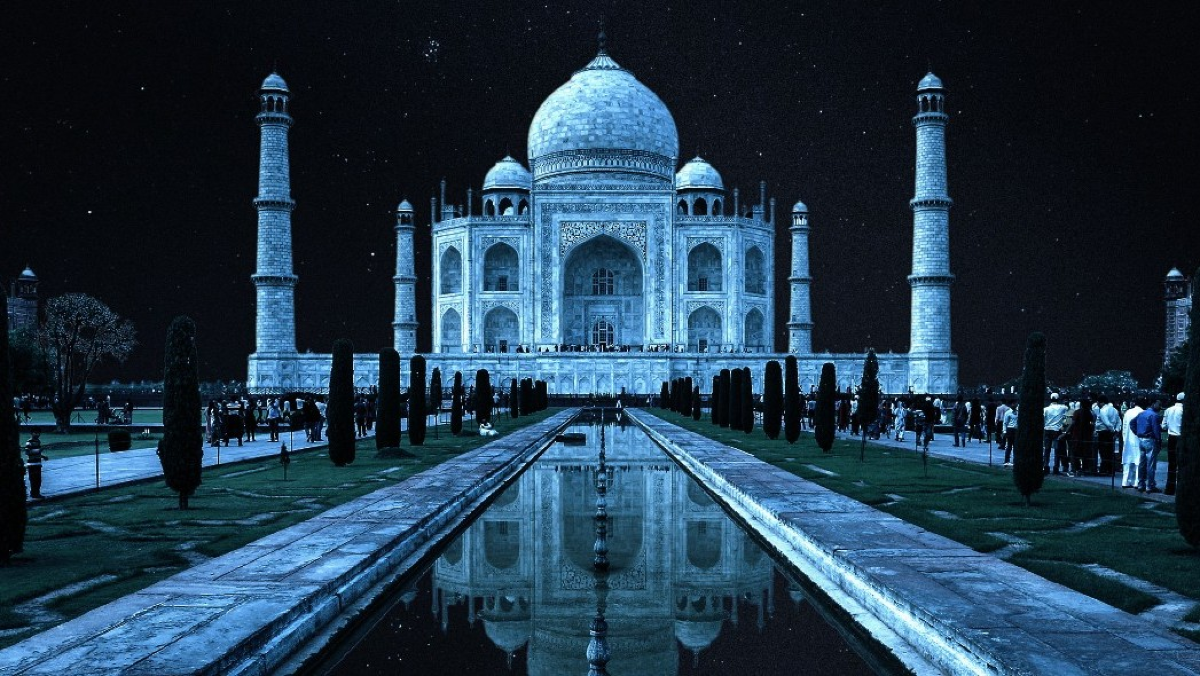
The Taj Mahal is famous for its “changing tones,” dictated by the position of the sun and moon. As it is constructed from high-quality translucent marble from Makrana, the building absorbs and reflects the shifting light of the sky.
Sunrise: The monument takes on a soft, ethereal pinkish hue.
Mid-Day: It glows with a brilliant and a dazzling white shade.
Full Moon: During moonlight, the Taj Mahal appears to emit a ghostly, silver radiance.
This interplay of light symbolises the presence of the divine and the fleeting nature of time.
The Charbagh
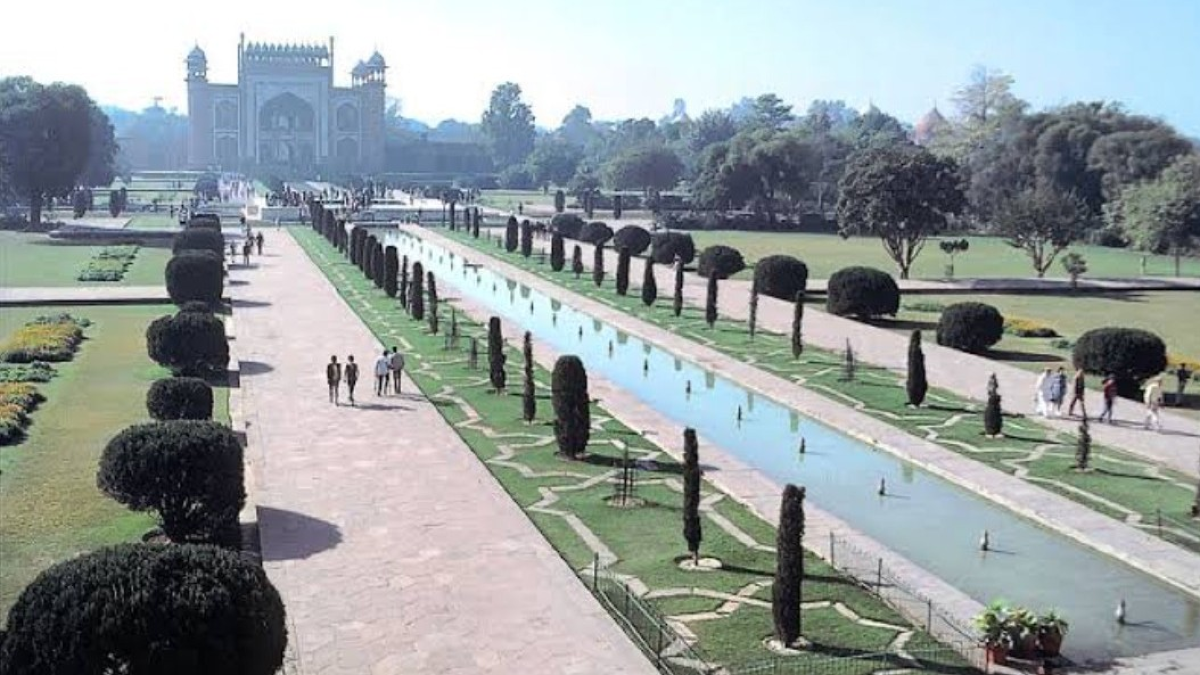
The architectural wonder extends beyond the marble walls to the Charbagh, or the four quadrant Persian garden. It is divided by wide walkways and reflecting pools and designed in a way to mirror the four rivers of Paradise mentioned in Islamic texts. The reflecting pool in front of the Taj Mahal is strategically placed to provide a perfect mirror image of the mausoleum, doubling its power of visual appearance and emphasizing the bridge between the earthly and the spiritual realms.
A Lifetime Experience
The majestic Taj Mahal is not merely an attainment of goal by engineers or architects; it is a bright example of the extraordinary creation out of human creativity, fueled by devotion. Its status as one of the “New Seven Wonders of the World” is well-deserved, as it continues to stand as a global symbol of eternal love and architectural masterpiece for generations together.