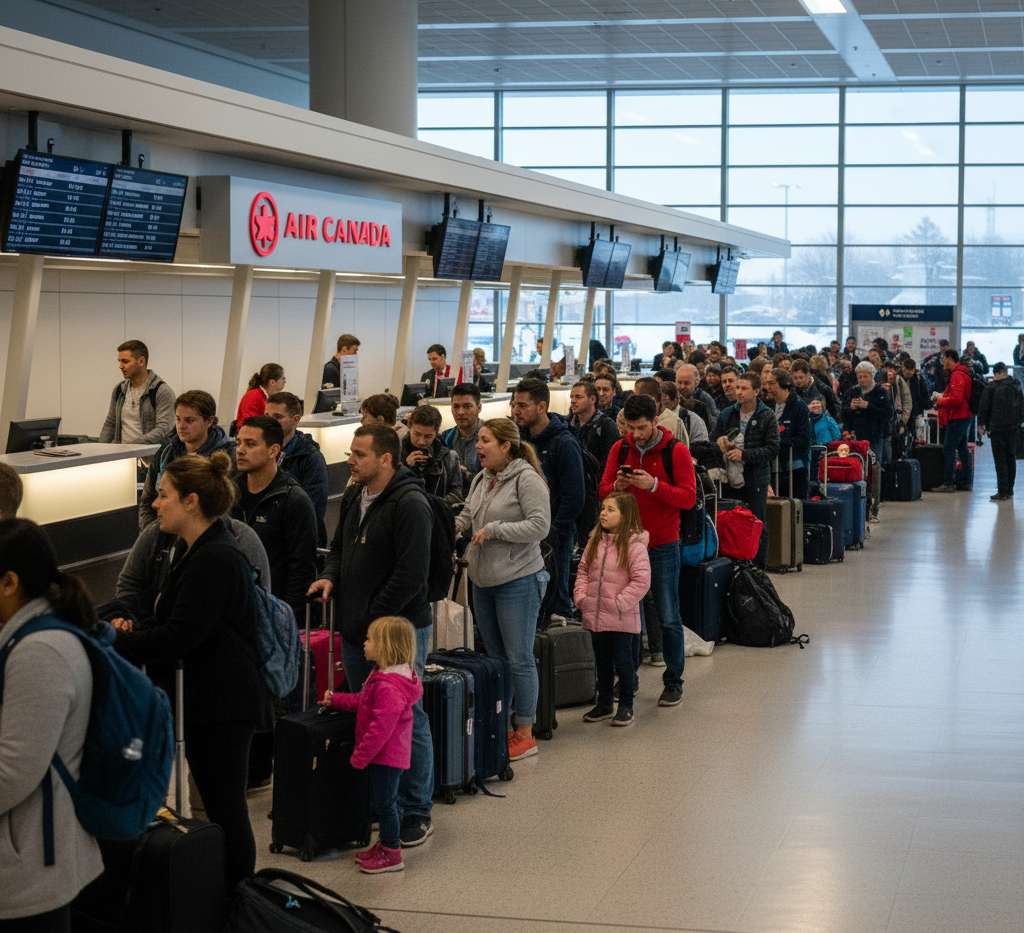
As Canada edged toward the final days of 2025, thousands of air travelers found their holiday plans unraveling under the weight of extreme winter weather. From December 28 to December 31, a powerful combination of freezing rain, heavy snowfall, and strong winds swept across Eastern Canada, triggering one of the most disruptive travel periods of the year. Airports that typically hum with year-end traffic instead echoed with cancellation announcements, frustrated passengers, and long rebooking queues.
Over this four-day window, a 749 flight cancellations and 3,215 significant delays nationwide. Toronto Pearson International Airport (YYZ) was the undisputed epicenter of the crisis, bearing the brunt with 224 cancellations in Departures and 247 cancellations in Arrivals across all four days (Dec 28–31, 2025). While the worst of the impact occurred on December 29th during peak freezing rain, the ripple effects continued to stall travel through New Year’s Eve.
What Caused these Disruptions?
Meteorologists described the event as a rare convergence of polar vortex conditions and a powerful Eastern winter storm, producing freezing rain, blizzard conditions, and wind gusts reaching 140 km/h in parts of Atlantic Canada. Southern Ontario and Quebec faced ice accretion of up to 15 millimeters, forcing repeated runway closures and overwhelming de-icing operations. Snowfall exceeded 25 centimeters in some regions, while sustained sub-zero temperatures strained airport infrastructure and ground handling systems.
The severe weather also caused widespread power outages and highway closures, compounding airport access challenges. According to aviation experts, these meteorological factors fall squarely under “events outside airline control,” a key distinction under Canada’s Air Passenger Protection Regulations (APPR). This classification plays a decisive role in whether passengers qualify for direct financial compensation.
Flight Disruptions Snapshot (Dec 28–31, 2025)
Cancelled Flights (Dec 28 to Dec 31):
|
Airline |
Dec 28 |
Dec 29 |
Dec 30 |
Dec 31 |
Total Cancellations |
|
Jazz (AC Express) |
52 |
102 |
38 |
8 |
200 |
|
Porter Airlines |
42 |
80 |
50 |
9 |
181 |
|
Air Canada |
33 |
43 |
23 |
9 |
108 |
|
WestJet |
14 |
29 |
33 |
10 |
86 |
|
Air Inuit |
— |
13 |
38 |
— |
51 |
|
PAL Airlines |
9 |
21 |
14 |
— |
44 |
|
Air Canada Rouge |
11 |
23 |
7 |
— |
41 |
|
WestJet Encore |
4 |
6 |
11 |
4 |
25 |
|
Pacific Coastal |
8 |
2 |
3 |
— |
13 |
|
DAILY TOTALS |
173 |
319 |
217 |
40 |
749 |
Delayed Flights (Dec 28 to Dec 31):
|
Airline |
Dec 28 |
Dec 29 |
Dec 30 |
Dec 31 |
Total Delays |
|
Air Canada |
276 |
340 |
303 |
32 |
951 |
|
WestJet |
251 |
215 |
193 |
30 |
689 |
|
Porter Airlines |
200 |
182 |
188 |
9 |
579 |
|
Jazz (AC Express) |
153 |
127 |
150 |
10 |
440 |
|
WestJet Encore |
69 |
84 |
52 |
8 |
213 |
|
Air Canada Rouge |
56 |
53 |
52 |
— |
161 |
|
PAL Airlines |
26 |
29 |
29 |
— |
84 |
|
Pacific Coastal |
24 |
12 |
19 |
— |
55 |
|
Air Inuit |
— |
36 |
9 |
— |
45 |
|
DAILY TOTALS |
1,055 |
1,076 |
995 |
89 |
3,215 |
(Source: FlightAware.com live flight delay and cancellation statistics)
Are Passengers Entitled to Compensation?
Under the Canadian Air Passenger Protection Regulations, airlines must compensate passengers only if delays are within the airline’s control and not related to safety. In this case, Air Canada and other carriers have classified the majority of disruptions as weather-related, which legally exempts them from the standard $400 to $1,000 compensation payouts. That said, passengers still retain several important rights, even when compensation does not apply.
Affected travelers are entitled to free rebooking on the next available flight, a full refund if travel no longer serves its purpose, or a return to their point of origin at no cost. Air Canada is also required to provide clear communication, including delay reasons and rebooking options, though meals and hotels are not mandatory when disruptions stem from weather.How to Claim a Refund or Submit a Compensation Request with Air Canada
Passengers seeking refunds or compensation should begin with Air Canada’s online Compensation Eligibility Tool, available approximately 72 hours after arrival. Travelers must enter their booking reference, flight details, and passenger name to check eligibility and submit claims directly. Claims must be filed within one year of the disruption, and Air Canada is required to respond within 30 days.
For additional expenses such as hotels, meals, or ground transport, especially on international itineraries, passengers may seek reimbursement under the Montreal Convention, which allows claims of up to approximately CAD 12,000, provided receipts are submitted. If a claim is denied and passengers believe the disruption was misclassified, they can escalate the matter to the Canadian Transportation Agency (CTA) for review.
Recovery Underway
As of December 31, weather conditions at Toronto, Montreal, and Vancouver airports are gradually improving, and flight operations are steadily returning to normal. However, aviation officials warn that residual backlogs and aircraft displacement may continue to affect schedules into early January. With another weather system possible next week, airlines are urging travelers to monitor flight status closely and remain flexible.
For thousands of passengers, the final days of 2025 will be remembered not for celebrations, but for crowded terminals and weather-delayed journeys. While the storm exposed the fragility of holiday travel, it also highlighted the importance of understanding passenger rights, documentation, and timely claims—lessons many Canadians are unlikely to forget as the new year begins.