In a groundbreaking moment for aviation safety, a twin-engine turboprop aircraft successfully landed itself at a Colorado airport this week after a sudden cabin failure. The unprecedented event marked the first real-world activation and successful deployment of Garmin’s revolutionary Autoland system during an emergency, bringing a new era of autonomous flight capabilities to the forefront of the industry.
Crisis at 23,000 Feet
The incident unfolded on December 20 aboard a Beechcraft Super King Air 200 operated by Buffalo River Aviation. While climbing out of Aspen at approximately 23,000 feet, the aircraft suffered a sudden and critical loss of cabin pressurization. This catastrophic scenario, which can leave pilots oxygen-starved and unresponsive within seconds, instead triggered a remarkable display of technological prowess.
As the emergency unfolded, the Garmin Autoland system—a sophisticated component of the Garmin Autonomi™ suite, automatically engaged. The technology immediately took command, assessing the aircraft's fuel levels and surrounding terrain while initiating a fully autonomous landing sequence. Though the two pilots on board were able to don oxygen masks, they made the "conservative judgment" to allow the system to maintain control, transitioning from active flyers to monitors of the robotic pilot.
Air traffic controllers at the Rocky Mountain Metropolitan Airport were alerted by the system’s automated distress broadcast. Using a calm, computer-generated voice, the aircraft communicated its emergency status and its intent to land on Runway 30 Right.
The ATC Communication ScriptBased on the LiveATC recordings from the December 20th incident, the system followed this sequence: 1. The Initial Declaration Immediately upon activation, the system broadcasts a "Mayday" to clear the frequency: "Mayday, Mayday, Mayday, aircraft November-Four-Seven-Niner-Bravo-Romeo has activated an emergency automatic landing system. Standby for more details." 2. The Intentions Broadcast Once the system calculates the best airport based on fuel, weather, and terrain, it provides specific details: "Niner-Bravo-Romeo, pilot incapacitation, seven miles southeast of Kilo-Bravo-Juliet-Charlie. Emergency Autoland in 19 minutes on Runway Three-Zero Right at Kilo-Bravo-Juliet-Charlie." 3. The Arrival Phase As the plane nears the airport (within 12 miles), it switches to the local Tower or CTAF frequency and broadcasts every 90 seconds: "Niner-Bravo-Romeo, emergency Autoland, five miles southeast on final for Runway Three-Zero Right. Standby." 4. The Ground Message After the plane has touched down and come to a complete stop, it broadcasts a final message to ensure emergency crews don't hit the plane if visibility is low: "Attention Rocky Mountain Metropolitan Traffic, aircraft November-Four-Seven-Niner-Bravo-Romeo disabled on Runway Three-Zero Right." |
From that point on, the system handled every variable of the flight with remarkable precision: calculating the optimal glide path through the Colorado mountains, managing engine power, and deploying the landing gear at exactly the right moment.
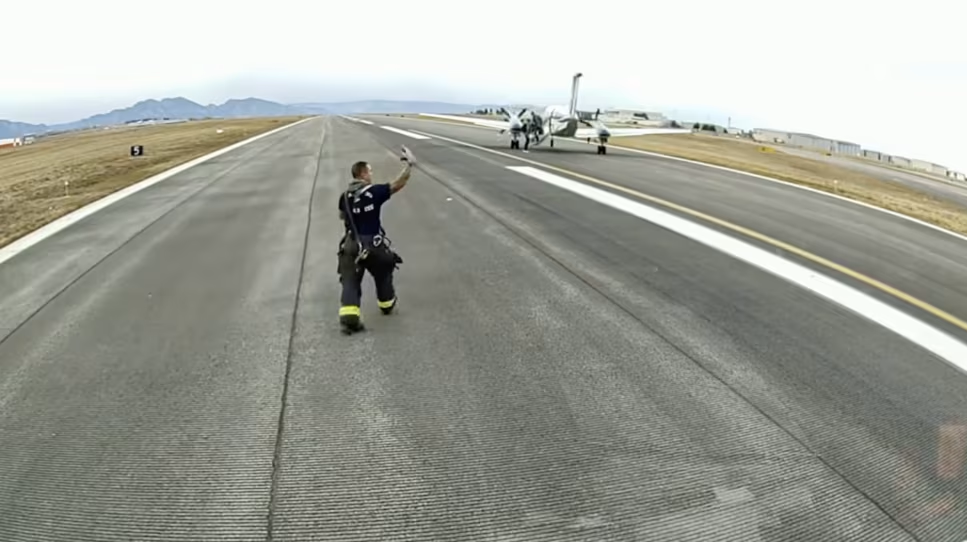
Eyewitnesses and emergency crews at the airport described a tense atmosphere as they lined the runway, anticipating a potentially difficult touchdown. However, their apprehension turned to awe as the King Air touched down smoothly, rolled to a controlled stop, and even shut down its engines autonomously to allow first responders safe access to the cabin.
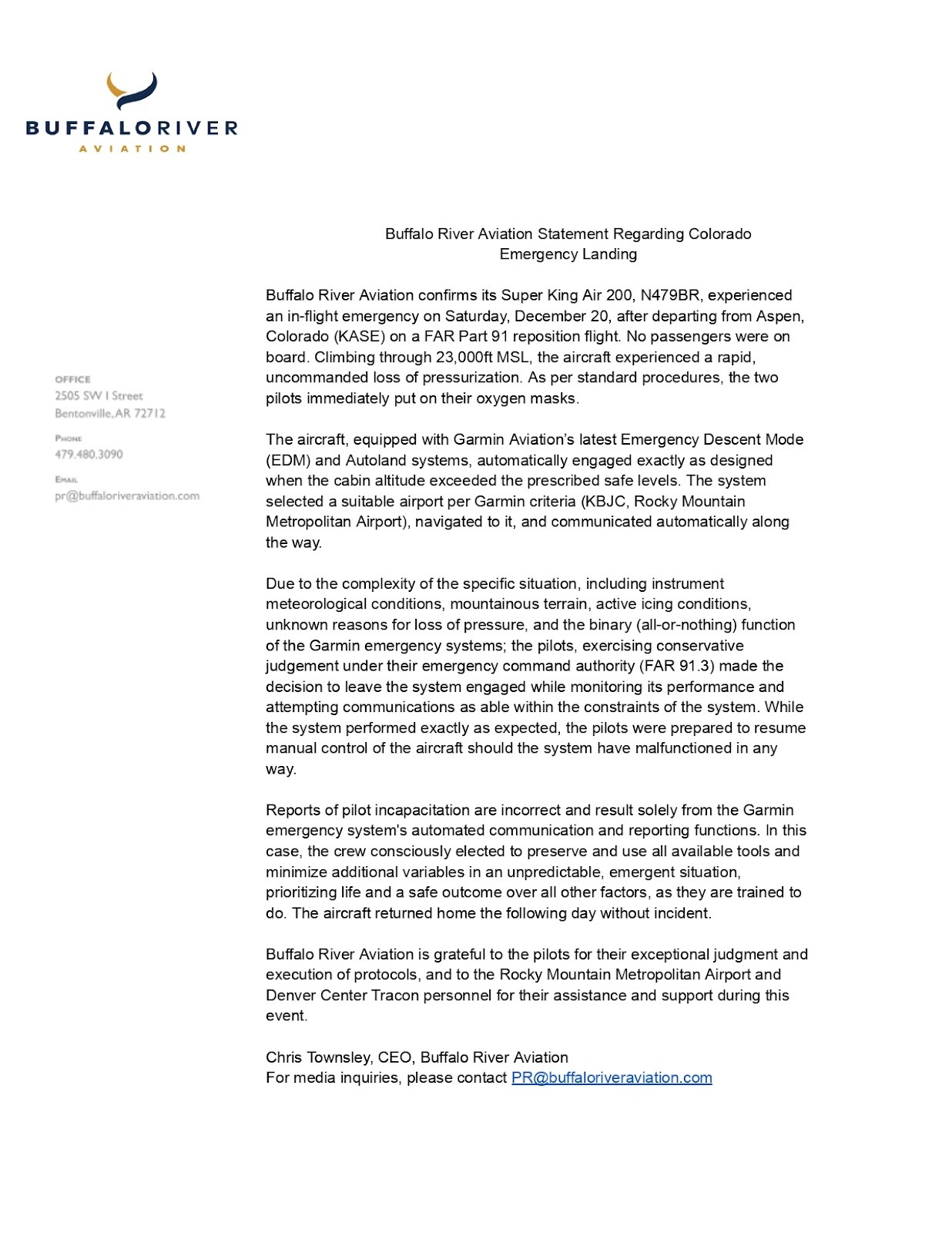
"The crew elected to use all available tools to minimize risk," stated Chris Townsley, CEO of Buffalo River Aviation, in the days following the event. "This is exactly what the system was designed for, to act as a safety net when the unexpected happens."
The Future of Flight Safety
The FAA and NTSB are currently reviewing the flight data, a standard procedure for such a landmark event. Garmin, which received FAA certification for the Autoland system in 2020, confirmed this was the first time the technology has been used "from start to finish" in a non-test environment.
Aviation experts suggest this "save" will likely accelerate the adoption of autonomous safety tech across the industry. For decades, cabin pressure failures have led to "ghost flights," where incapacitated crews fly until fuel exhaustion. This week, technology proved it can change that narrative.
The aircraft involved, registered as N479BR, was inspected and cleared to return to service the very next day, flying home to Oklahoma as a quiet testament to the success of the mission.