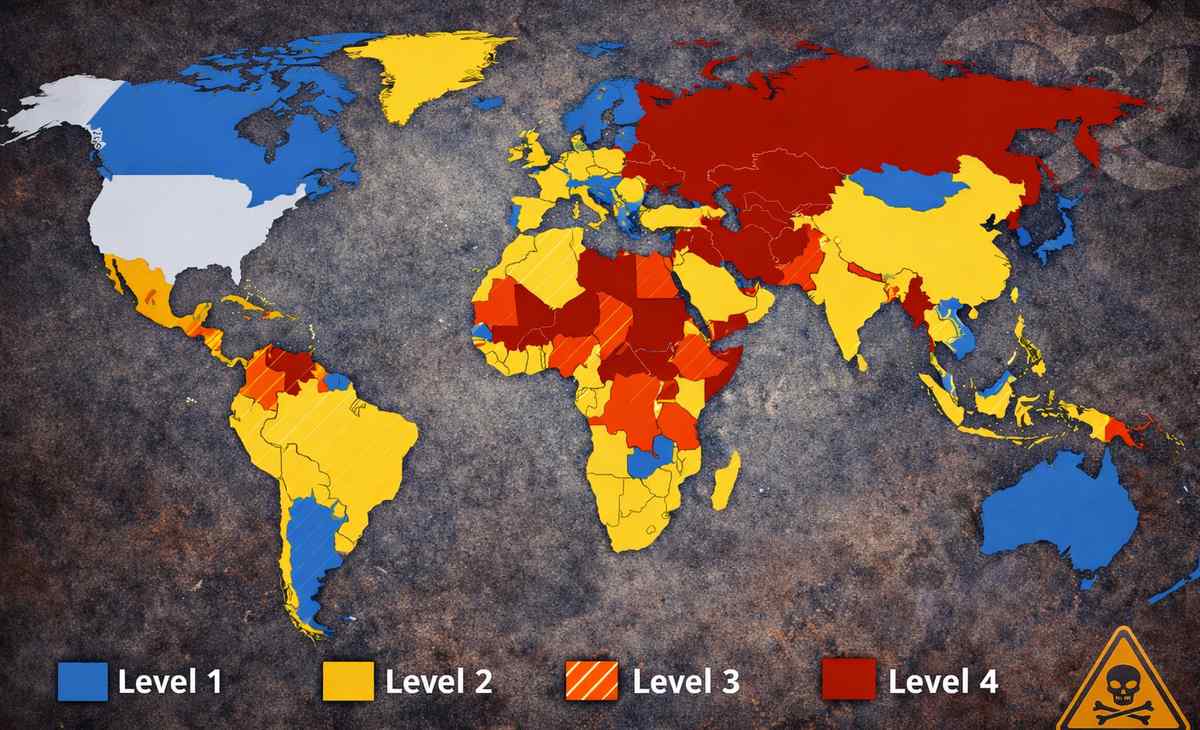
The United States Department of State has placed 22 countries and one territory under its highest travel warning, known as Level 4: “Do Not Travel.” This advisory is issued when conditions in a country present life-threatening risks to travelers. Level 4 is the most serious category in the U.S. travel advisory system and indicates that Americans should avoid traveling to these locations unless absolutely necessary.
Understanding the U.S. Travel Advisory System
The U.S. Department of State uses a four-level advisory system to inform citizens about potential risks when traveling internationally. Level 1 advises travelers to exercise normal precautions, indicating that general safety conditions are stable. Level 2 recommends exercising increased caution because there may be potential safety concerns. Level 3 urges Americans to reconsider travel due to serious risks in the destination. Level 4, the most severe warning, strongly advises U.S. citizens not to travel because conditions pose extreme danger. These advisory levels are reviewed regularly and updated whenever significant changes occur, such as armed conflict, terrorism, political instability, or natural disasters.
What Level 4 “Do Not Travel” Means
A Level 4 advisory indicates that a country is experiencing extremely dangerous conditions. These dangers may include war, terrorism, violent crime, civil unrest, kidnapping, or the collapse of government authority. In many Level 4 countries, the U.S. government may have limited or no ability to provide emergency services to its citizens. In some cases, U.S. embassies or consulates operate with reduced staff or may be temporarily closed because of security threats. Americans who are already present in a Level 4 country are generally advised to leave when it is safe to do so.
Full List of Countries and Territories on the Level 4 List
The following countries and one territory are currently under a Level 4 “Do Not Travel” advisory:
|
Country / Territory |
Main Reasons for Level 4 Advisory |
|
Afghanistan |
Armed conflict, terrorism, civil unrest, kidnapping, crime, and limited healthcare |
|
Belarus |
Political unrest, arbitrary law enforcement, risk of detention |
|
Burkina Faso |
Terrorism, violent crime, and kidnapping |
|
Myanmar (Burma) |
Armed conflict, political instability, civil unrest |
|
Central African Republic |
Armed conflict, crime, terrorism, kidnapping |
|
Gaza |
Ongoing armed conflict and severe security risks |
|
Haiti |
Gang violence, kidnapping, crime, and civil unrest |
|
Iran |
Terrorism risks, wrongful detention, civil unrest |
|
Iraq |
Terrorism, armed conflict, kidnapping |
|
Lebanon |
Political instability, terrorism, and armed conflict |
|
Libya |
Armed militias, civil unrest, terrorism, and kidnapping |
|
Mali |
Terrorism, violent crime, kidnapping |
|
Niger |
Terrorism, crime, and political instability |
|
North Korea |
Risk of wrongful detention and strict government controls |
|
Russia |
Political tensions, wrongful detention risks, and war-related security issues |
|
Somalia |
Terrorism, piracy, kidnapping, violent crime |
|
South Sudan |
Armed conflict, crime, and kidnapping |
|
Sudan |
Armed conflict, civil unrest, terrorism |
|
Syria |
Ongoing war, terrorism, and kidnapping |
|
Ukraine |
Active war with Russia |
|
Venezuela |
Violent crime, political instability, wrongful detention |
|
Yemen |
Armed conflict, terrorism, kidnapping, and humanitarian crisis |
Reasons Behind the Level 4 Advisory
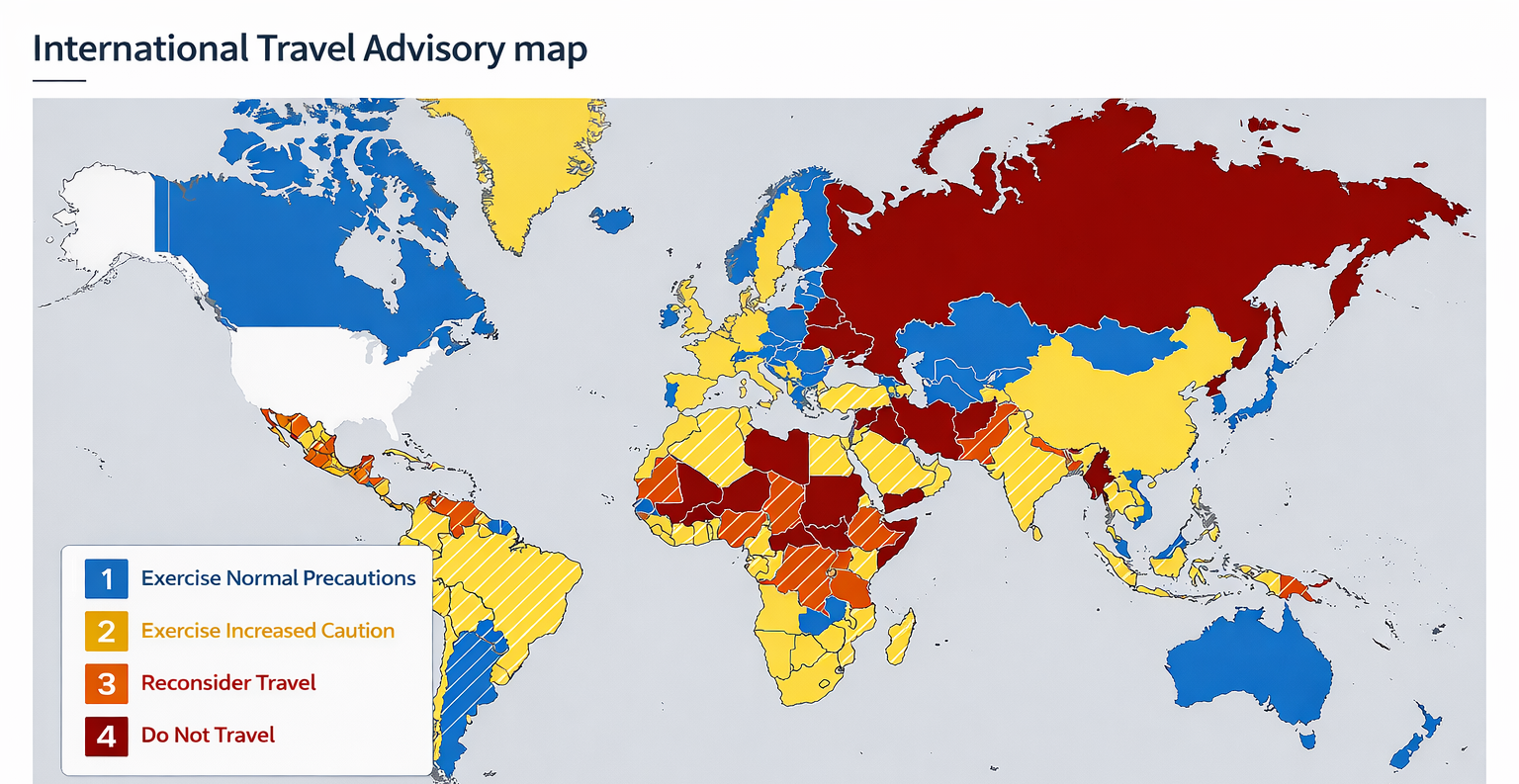
Several factors can lead to a Level 4 “Do Not Travel” designation by the U.S. Department of State. This is the highest travel advisory level and is issued when there is a very high risk to the safety and security of U.S. citizens. The designation is based on security assessments and current country conditions. One major reason is ongoing armed conflict or war. Countries such as Afghanistan, Ukraine, Syria, Sudan, Yemen, and South Sudan are experiencing active fighting or unstable security situations that pose direct threats to civilians. Violence may occur without warning, infrastructure can be damaged, airports may close, and evacuation routes may be limited.
Another reason is terrorism and violent crime. In countries such as Mali, Burkina Faso, Somalia, and Iraq, extremist groups operate in various regions. They may target government facilities, public gatherings, transportation hubs, and foreign nationals. Kidnapping, armed robbery, and carjacking also increase the risks to travelers. Political instability and civil unrest also contribute to Level 4 advisories. In Haiti and Lebanon, political crises, economic collapse, protests, and weakened law enforcement have created unpredictable security conditions. Demonstrations can escalate into violence, and essential services such as healthcare, fuel, electricity, and banking may be disrupted.
Wrongful detention of foreign nationals is another concern in countries such as North Korea and Iran. U.S. citizens may face detention without clear legal protections or timely consular access. Dual nationals may not be recognized as U.S. citizens by local authorities. Limited U.S. government assistance can also result in a Level 4 warning. In some countries, U.S. embassy operations are reduced, relocated, or suspended due to security conditions. This limits the ability to provide evacuation support, passport services, medical coordination, or legal assistance. Other factors may include widespread kidnapping threats, state collapse, or severe crises combined with security breakdowns. Each Level 4 designation is country-specific and reviewed regularly based on current conditions.
How to Check Current Travel Advisories
Travel advisories can change depending on global events. The most reliable way to check the latest information is by visiting the official U.S. Department of State Travel Advisory website. On the website, travelers can search for any country to view its current advisory level, detailed safety information, and emergency contact guidance.
Comments (0)
Log in to share your thoughts
No comments yet
Be the first to share your thoughts!